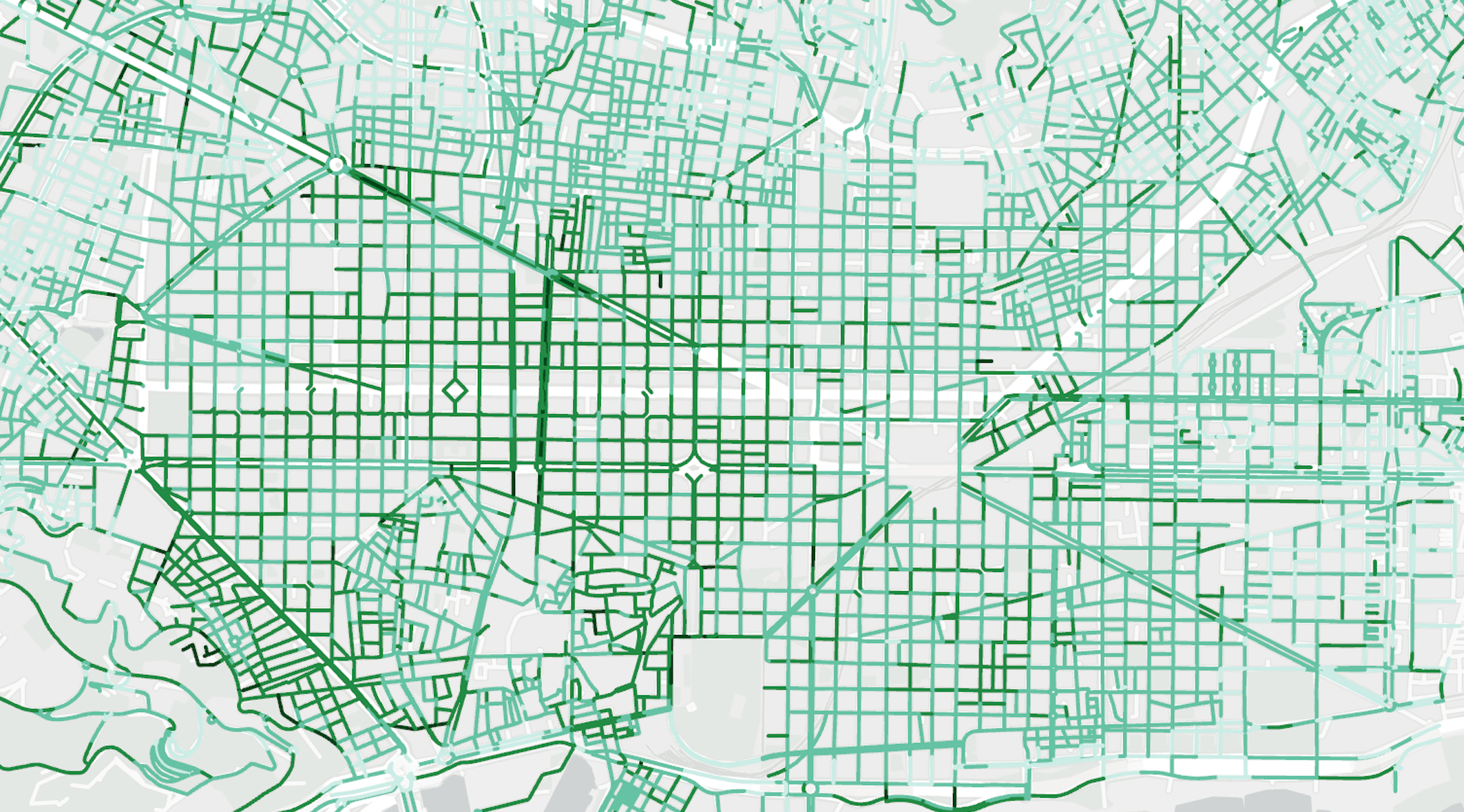
The BiciZen app is a map-based digital tool developed through a European collaboration between five universities, including Tampere University in Finland. It allows users to report cycling-related challenges, share positive experiences, and suggest improvements to urban cycling infrastructure. While originally designed for citizen science and urban development, BiciZen has also proven to be a powerful educational tool.
Cycling is a sustainable, accessible, and affordable mode of transport. It supports children’s independence, physical activity, and environmental awareness. In schools, cycling education can be a gateway to broader themes such as digital literacy, civic engagement, and climate action. BiciZen enhances this by allowing students to observe their environment, document real-world issues, and propose solutions – as citizens in the here and now.
In a pilot project in 2024, two fifth-grade classes in Tampere tested the app in a school setting. The process began with teachers learning the app, requesting group-specific access to the app for minors as well as consent from guardians. This was followed by students who quickly adapted to using it. Both groups found BiciZen intuitive and engaging. Students were particularly enthusiastic about making entries. We coupled the use of the app to environmental arts educational activities. The students final art projects reflected deep emotional connections to cycling—highlighting themes like freedom, nature, and joy.
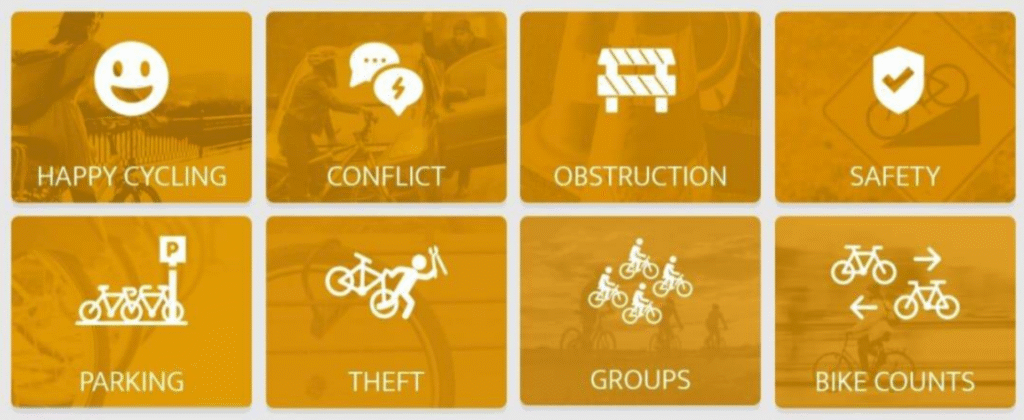
Despite a somewhat snowy weather in late October, students participated in a field trip to explore the surroundings of their school from a cyclist’s perspective. They made observations using the app, noting both hazards and highlights. Teachers observed that students enjoyed the autonomy allowed by the exercise and were motivated by the use of their mobile devices. Some even counted bikes in the school yard or suggested repairs to bike racks. The app’s most used categories were “Happy cycling”, “Obstruction” and “Safety.” Less popular were “Groups” and “Bike counts”. These insights can help refine the app’s educational use.
The pilot also revealed the influence of enthusiastic teachers. In one class, where cycling is offered as an elective subject, students showed a strong understanding of cycling’s health, environmental, and societal benefits. This suggests that teacher engagement plays a crucial role in shaping students’ attitudes toward sustainable mobility.
Art created during the project further emphasized the emotional and environmental dimensions of cycling. Working in groups, the students drew a bicycle with charcoal and used colored pencils to illustrate their memories, images, feelings, and sensory experiences associated with cycling. Many drawings featured bicycles floating above the ground, surrounded by flowers, animals, and summer landscapes. Students associated cycling with freedom, nature, and happiness. However, most said they cycle mainly in summer, raising the question: how can we encourage year-round cycling?
This challenge points to the role of adults. While young children can’t be expected to manage winter cycling alone, parents and guardians can support them by maintaining bikes, changing tires, and encouraging cycling in all seasons. Concurrently, support from the city is needed in the maintenance of cycling routes. With positive developments, cycling could become a mainstream subject in schools.
The latest BiciZen news from Tampere
In spring 2025 the app has been presented at the City of Tampere’s Sustainable Mobility Ambassadors’ meetings, at sustainable mobility-themed neighbourhood activity days with City of Tampere’s Mobility Mindshift-project and at cycle maintenance events at high school cycling weeks. Inspiring high school students to use the app seemed to be more challenging than for primary school students, in a short intervention. Adults, on the other hand, seemed to be enthusiastic, but it could be a long way from here to the actual use of the app. Based on this experience, I think that when introducing the app, it would be a good idea to try it out together, for example on a small-scale joint excursion, as in our school pilot, so that the threshold for adoption is not too high.
In autumn 2025, we will pilot the application in several schools. This will be done using cycling maps produced by the City of Tampere in collaboration with the Eco-social Education network. The maps show safe cycling routes to schools in each district. The maps also show the duration of different school journeys by bike or on foot in minutes. In the fall, we will focus specifically on children’s school journeys and implement a challenge to encourage more students to walk or cycle to school.
Conclusion:
Our BiciZen cycling pilots demonstrate that the app is a valuable pedagogical tool. It’s easy to use, engaging for students as well as for adults, and supports learning across multiple domains. It empowers children, along with older generations, to become active participants of the sustainable city in shaping their urban environment, fostering a sense of civic agency from their own perspectives. We hence consider the pedagogical development of BiciZen in European collaboration promising, as part of the sustainable mobility development in the EU.
Getting Started with BiciZen:
Download the free app, register as an individual or a school class, and begin making entries.
Teachers can create a shared class account for students to use.
Author: Maria Sulonen, a class teacher and researcher in sustainability education at Tampere University. She also works as a yoga teacher and musician in the band Luhtaniitty, playing environmentally themed music.