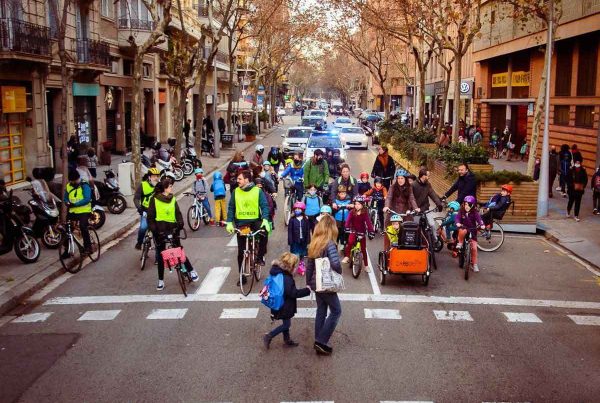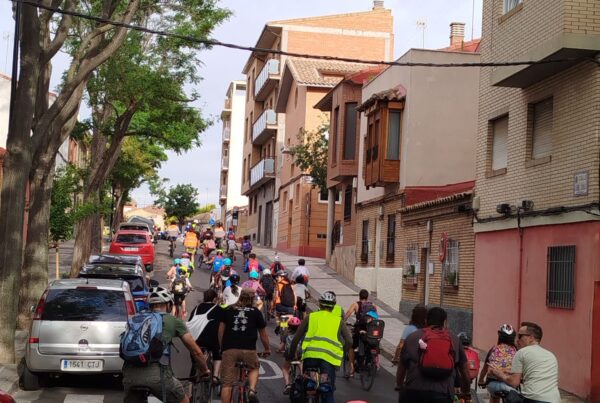
Our research team at City Lab Barcelona is using the BiciZen platform to crowdsource data on bicycle ridership and improve our bicycle traffic estimates at the street link level. We also want to develop a gender and age-based model, since we have not seen anything like this in the literature. This work is in collaboration with the Barcelona Supercomputing Center (BSC), CASE team and Bicicleta Club de Catalunya (BACC).
What are others doing in the space of bicycle ridership modelling? How does our work stack up to global leaders in the field? How can we learn from each other and collaborate? Where are possible synergies?
The bicycle ridership modelling workshop brought together a select group of research teams from universities and the private sector to try to answer these questions.
Highlights:
Jordi Honey-Rosés, ICTA-UAB [PDF]
A crowdsourcing approach for developing a bicycle ridership model in Barcelona.
- We presented preliminary results from our first crowdsourced model in Barcelona
- We see considerable improvements with the crowdsourced data from volunteers collected with BiciZen
- Overestimates on low ridership streets persist
- XGBoost performs the best, consistently outperforming Poisson Regression models, CNN and Random Forest
Roxy Tacq, Developing ridership estimates in the Netherlands and Spain [PDF]
- She and her team are working on low cost approaches to developing bicycle ridership estimates
- Preliminary models developed in 3 cities that identify the roads where 75% of bicycle travel takes place
Sirisha Kothuri, Senior Researcher, Portland State University
- Many exciting papers on bicycle ridership modelling is coming out of a large team and multiple authors at Portland State University
- See for example:
- While there are major advances in the use of third party data, the work from the team concludes that field observations, including short-term measurements, remain critical to ensure model reliability.
- This team has also had difficulty modelling low volume streets
Mintu Miah, California State Department of Transportation
- Presented work modelling bicycle ridership for the State of California
- Dr Miah has made important contributions in developing methods to rescale short term measurements to annual estimates
David Bietal and Justin Pinheiro, ECOCOUNTER
- Ecocounter is a dominant player in the field of counting technologies
- They are working on forecasting models
I left the meeting with the sense that we are still in the early years of bicycle ridership modelling, and that this research will explode in the next decade. The research team from Portland State University are clearly leading the way, although we did not have anyone from UC Santa Barbara where they are also doing good work.
We have a lot to learn from others, and yet our work is also headed in the right direction.
A huge thank you to the speakers for sharing their work!