San José, Costa Rica is an urban success story on the verge of breaking through.
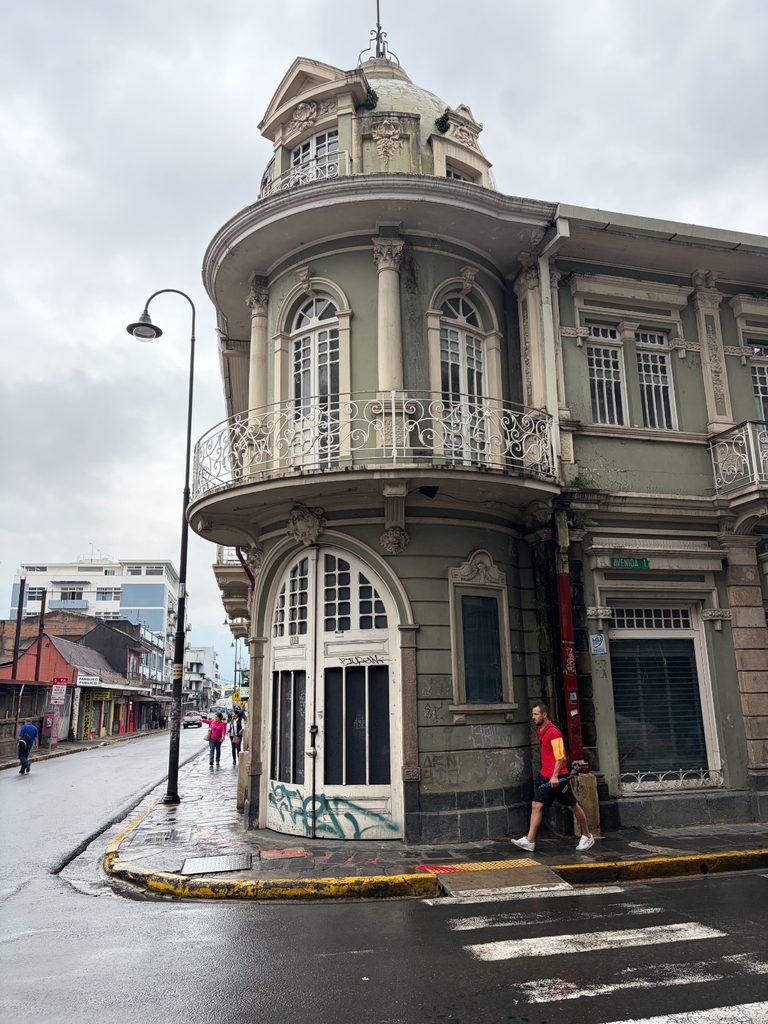
The city has been trapped in death spiral of urban decay, with residents fleeing to the suburbs, offices and restaurants closing, vacant lots, empty office buildings, noisy streets and overwhelming signs of social exclusion and despair. The city lost 40% of its residents between 1963 and 2022. Building occupancy rate today is only 65%, with 35% of buildings unoccupied or with severe physical deterioration.
And yet there is a core group of believers in San José who are convinced that they can turn the city around. The fundamentals are all there:
- The city has a walkable grid, with small blocks that would make Jane Jacobs proud
- There are abundant green spaces and parks
- New and exciting museums and cultural destinations
- Avenida 0 and other corridors are already pedestrianized, with high volumes of foot traffic.
- 2 train stations
- Multiple architecture schools, especially TEC de Costa Rica and committed students such as Ernesto Alonso Ugalde
- Wonderful markets
- Fascinating history
- The capital of Central America’s most prosperous country
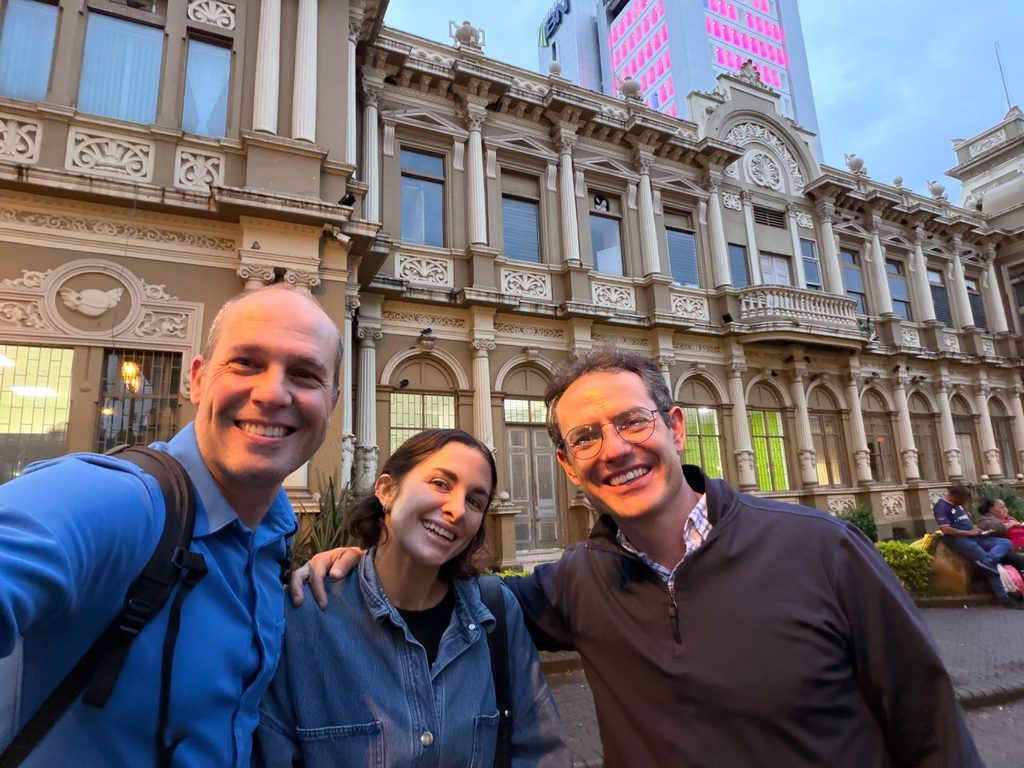
I was invited to San José by the believers in its urban transformation. Tomas Martinez and Enmanuel Salazar from the TEC de Costa Rica, in collaboration with Andrea Terán, from Fundación Yamuni Tabush and Luis Morales and Claudia Sachs from Fundacion Centro.
They share a conviction that San José can recover its urban vitality, attract residents back to its historic center, and become a more vibrant, walkable and inclusive city.
They are not the first to want to transform San José. Over the years, the city has produced ambitious plans, studies and proposals. There is no shortage of ideas. The challenge is turning those ideas into action, building trust among the different actors, and creating the conditions for public and private investment.
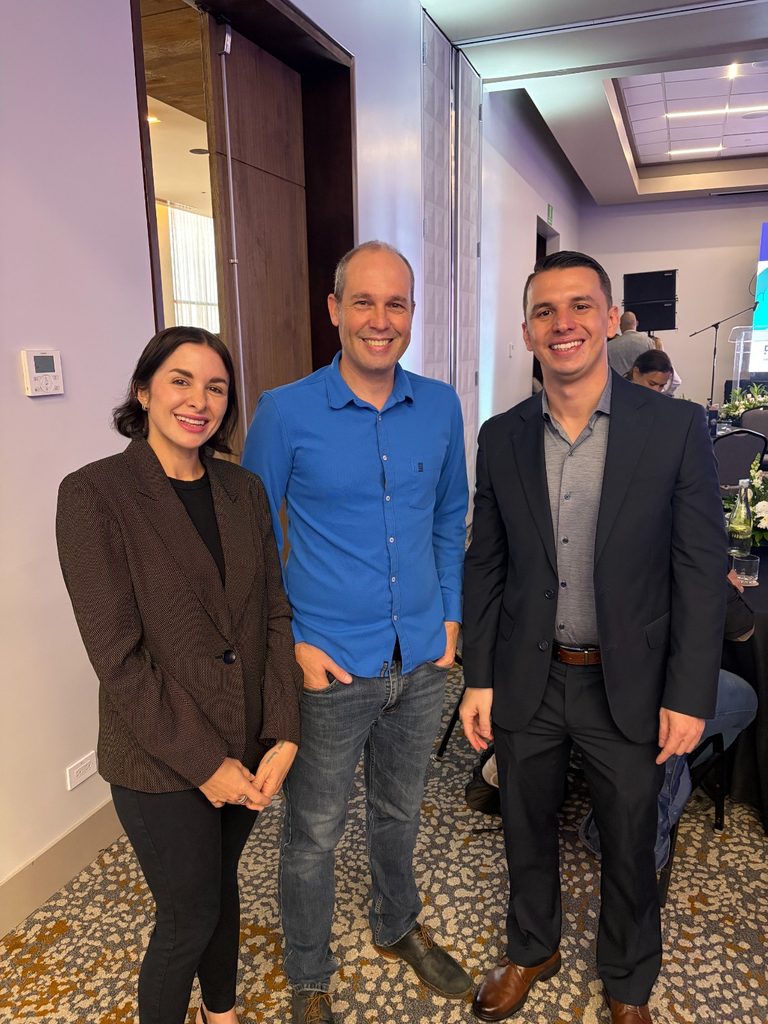
During my week in San José, I gave two keynote addresses. The first was at an event that recognized 21 municipal governments for participating in a program to transform urban bus stops, funded by Fundación Crusa and Fundacion Yamuni Tabush. It was encouraging to see so many municipalities working to improve the everyday experience of public transport users.
At this event, I also had the opportunity to meet the Mayor of San José, Diego Miranda Mendez, who expressed interest in collaborating with the technical team at the Área Metropolitana de Barcelona to advance the transformation of the city and its metropolitan region.
The following day, I met with Roy Allan Jimenez, a senior urban planning official at the Municipality of San José, who shared his vision for creating a single office to coordinate the permitting processes associated with urban redevelopment. This kind of institutional reform may not attract the same attention as a new park or pedestrian street, but it could be essential to unlocking investment in the historic center.
One of the biggest challenges is bringing people back to live in the city center. Many buildings are vacant or underused, yet converting former offices into residential units has proven extraordinarily difficult. Property owners face regulatory uncertainty, complicated permitting procedures and significant renovation costs. There is growing interest in finding ways to overcome these barriers and make housing in the center viable again.
What struck me most during my visit was the determination of everyone I met. Researchers, students, municipal officials, foundations and private-sector actors all want a better San José. It seems like they simply need to find a shared vision for its future and work together to get there.
One day, I would love to see San José recognized internationally for its urban transformation. Perhaps through the WRI Ross Center Prize for Cities, which celebrates transformative urban initiatives, or through programs such as the Bloomberg Philanthropies Mayors Challenge or the Bloomberg Initiative for Cycling Infrastructure (BICI), which support cities pursuing ambitious urban improvements.
These are the kinds of opportunities that San José should be aspiring to. There is real potential to become an exemplary city.
I leave San José absolutely convinced that major transformative change can happen here. I am tremendously grateful for the extraordinary hospitality, and I look forward to seeing what this remarkable group of believers can accomplish.
More thoughts on my trip here: Reflexiones 24 Octubre 2026.