We’re excited to share findings from our recently published academic study on BiciZen, a citizen science platform designed to make cities more bike-friendly. The article reveals how digital tools can bridge the gap between cyclists, urban planners, and researchers to create safer, more accessible cycling infrastructure.
At its core, BiciZen is more than just a mobile app—it’s empowering cyclists to document their experiences while generating valuable data for city transformation. What began as a tool for reporting potholes and dangerous intersections has evolved into a comprehensive platform that records challenges and joys of urban cycling available for all stakeholders.
Through our research, we discovered that platforms like BiciZen face unique challenges and opportunities. The most significant insights came from observing how different groups interacted with the technology:
Five Key Lessons from the BiciZen Project
- The feedback process is resource and time intensive
We quickly learned that maintaining user engagement requires constant nurturing. Unlike commercial apps, citizen science platforms demand ongoing dialogue with participants to sustain participation. Most frequent users did not turn out to be the initial collaborators in setting up the project, as we expected. - We confronted a tension between functionality and simplicity
The platform’s navigation structure allowed us to offer more features and collect more data than what we had initially envisioned, and eventually, we opted for more functionality at the expense of simplicity. - The interests of researchers, public officials and citizens do not necessarily align
We found that questions of interest to the research community were not necessarily of interest to cycling advocates or municipal leaders. Therefore, a challenge in the creation of BiciZen was to find the alignment of interests between stakeholders. - Most contributions are from a few highly committed users
BiciZen contributions were highly lopsided regarding who contributed, where, and what contributions were made. We found that 69% of contributions were from 4% of users, including mid-sized cities. - BiciZen was used as a data repository
BiciZen served as a valuable platform to share the information previously collected but did not have the place to share it widely. Many of the most detailed text descriptions came from users who uploaded photos and commentary from sites, places and incidents that were collected a few years back.
Impact and conclusions
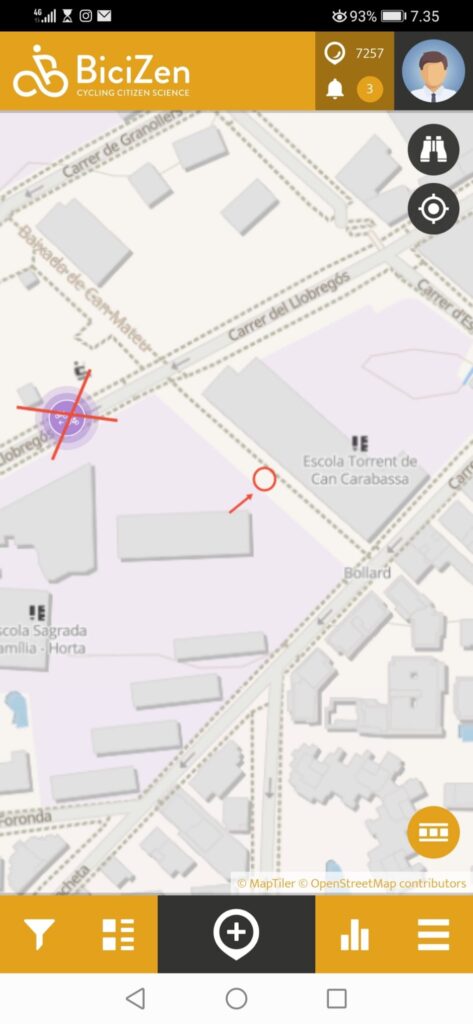
BiciZen has been well received, generating 5,571 contributions in less than one year, and helping build community through the process of learning and exchange. The platform is providing an outlet for sharing insights about conflicts and issues found in cities and regions. We hope that this is just the beginning of a project that may help us learn how citizen users may contribute to both science and public policy on urban mobility.
However the creation of collaborative platforms – even when there are abundant contributions, does not guarantee that it will produce innovative science. While we have created a functioning platform with a steady user base, considerable effort will be needed to ensure that BiciZen can make an innovative contribution to knowledge. Future research will need to focus and target data collection campaigns, and collaborate with municipal leaders or cycling organizations. We see potential in working with municipal managers in documenting the everyday cycling experiences in their municipality.
Looking Forward: The Future of Cycling Citizen Science
As cities worldwide commit to more sustainable transportation systems, tools like BiciZen demonstrate how technology can democratize urban planning. Our research suggests that successful platforms must be designed for multiple stakeholder perspectives and cultivate and support super-users while broadening participation.
BiciZen offers a platform to ground cycling policy designs in user experience at local and regional levels. This is not only a practical matter but involves democratic dimensions as well: in liberal democracies, citizens have a right to take active roles in the development of their city and public spaces, and in this sense, practice ‘cycling citizenship’ (Aldred, 2010).
Publication:
Honey-Rosés, J., Liebscht, L., Batista, P., Benatallah, B., Brussel, M., Flacke, J., Häkli, J., Kallio, K. P., Lynn, T., Mäkelä, M., Melo, L., Simón-i-Mas, G., & Vilariño, F. (2025). BiciZen: Lessons in the Development of a Crowdsourcing Mobile App to Make Cities More Bikeable. Journal of Participatory Research Methods, 6(1), 143–168. https://doi.org/10.35844/001c.126552
Reference
Aldred, R. (2010). ‘On the outside’: Constructing cycling citizenship. Social & Cultural Geography, 11(1), 35–52. https://doi.org/10.1080/14649360903414593