The study “Bicycle Theft in Barcelona 2024” has been published this week within the collaboration between Bicicleta Club de Catalunya and ICTA-Universitat Autònoma de Barcelona (City Lab Barcelona).
The report analyses 921 bicycle thefts recorded in Barcelona in 2024, identifying temporal and spatial patterns across the city. Beyond describing incidents, the study addresses a structural issue: bicycle theft is not merely a property crime — it is a direct barrier to sustainable mobility.
When a bicycle is stolen, the impact goes beyond economic loss. It undermines trust, discourages cycling uptake, and weakens public investment in active mobility. If cities aim to shift trips from private cars to low-carbon modes, the security dimension cannot remain secondary.
Key findings
- Theft is unevenly distributed across neighborhoods, revealing identifiable geographic concentrations.
- Clear temporal patterns suggest predictable windows of vulnerability.
- Data fragmentation limits coordinated action and policy evaluation.
The findings reinforce the need for an integrated strategy combining:
- Secure and adapted parking infrastructure
- Robust bicycle registration systems
- Unified and interoperable data
- Strong institutional coordination
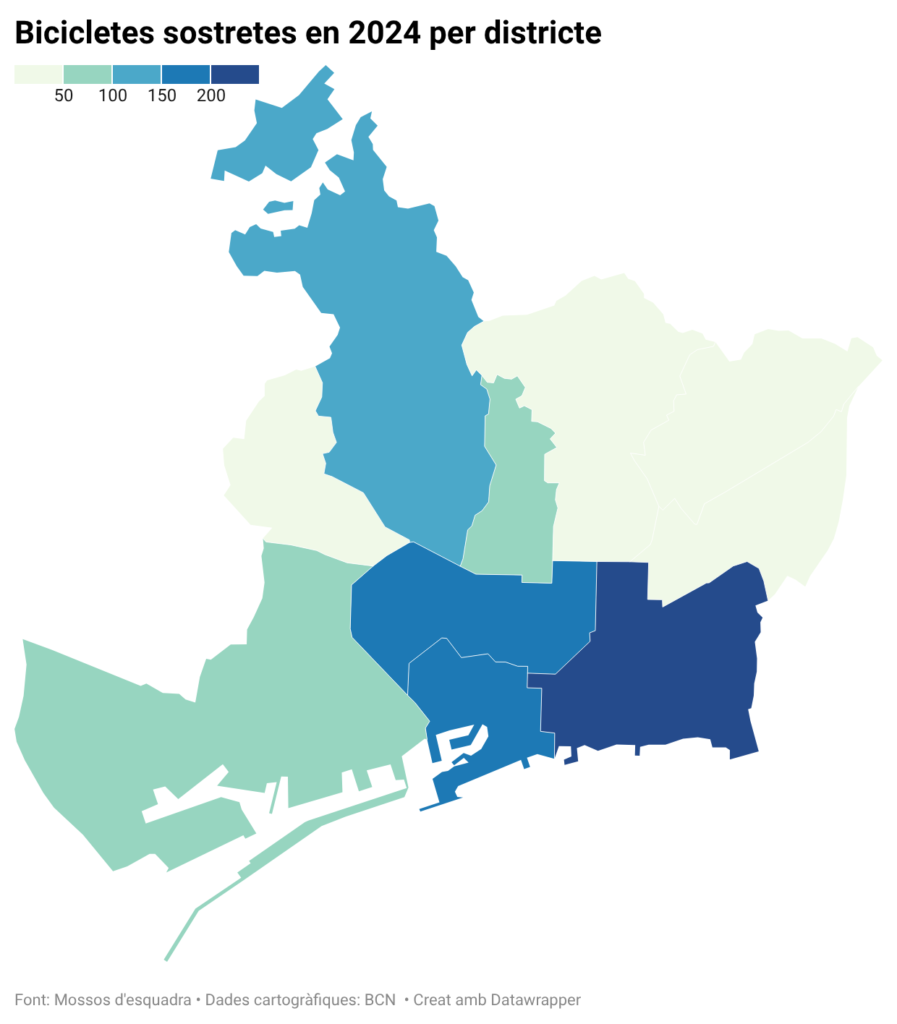
This study serves as the background report for the work developed within the Bicycle Theft Coordination Space, whose consolidated results will be officially released soon.
Addressing bicycle theft is not a marginal issue. It is central to ensuring that cycling remains a reliable, accessible, and scalable mode of urban transport. Evidence-based policy must treat security as a core condition for sustainable mobility transitions.